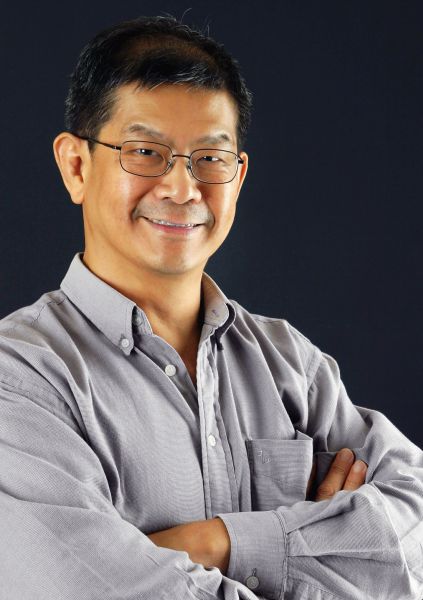
We, The Betrayed Generation
Loyar Burok
27 April, 2011
By Tan Shang Neng
MY NAME IS TAN SHANG NENG, I AM 23 YEARS OLD. I hail from Klang, Selangor. And I am from the ‘betrayed generation’.
My elders have often used my name, together with my peers of my generation (what may well be the youth today), to justify a lot of their actions. They say they are doing this for the betterment of our future, they are doing that to ensure that the youth will have something worthwhile to inherit.
They say that they have the youth’s, and the youth’s children-to-be’s, best interest at heart.
And that is when they degrade our education system, making a foolery out of it.
That is when they conduct government awards of businesses behind closed doors.
That is when Chief Ministers become billionaires.
That is when they destroy our rainforests.
That is when they agree to allow Lynas to open a rare earth processing plant.
That is when they close both eyes when there are still thousands homeless; people go hungry every night, even in the heart of KL.
That is when they rig our elections.
That is when they insult each other, degrade the women, kill the men.
That is when all they teach us do to, is to hate one another. To identify with the colour of our skin first, and being Malaysian second.
They did and still do all those in the name of the betterment of the youth.
Recently, they have promised us change. March 8 tsunami. RPK. Anwar. KJ. 1Malaysia. Birth of alternative media. Sure-fire two-party system.
We bought into all that, all of us youths. We were hopeful dreamers swept up by the promise of a new world order, or at least a new Malaysian order. One based on merits. One built again from the blood and sweat of those who promised to keep our futures secured, to return us to the path of guaranteed glory.
Years on, we are nowhere nearer to finding that path.
We are the betrayed generation.Our trust has been betrayed.BN, PR. Look at them.Mainstream media, alternative media. Look at them.MCA, DAP. Look at them.
They are out there for number one: themselves.
We are the betrayed generation. We are taught to be subservient. To kowtow. To have blind
faith.That is flying in the face of what we have been promised.
The truth of the matter is, Najib, Anwar, KJ, Karpal, LKS. They are old fools, their minds blurred to our needs. They see what they want to see and hear what they want to hear. And we, the betrayed generation, are far from their plans. Their world is one of pure politics, expedient survival being the key. They are politicians.
We are at a time when politicians are what we need least. We need statesmen. We need real heroes. It is time for another revolution, but we need a beacon to come together. We will not find this beacon from the delusional oldies. Their version of politics is a very different one to what we aspire to one day have. They are the lost generation, by their own doing.
Are you going to be my beacon? Or are you going to run away, be lost like them all? I need a point, a focus, a flag I can identify with. To lead me on. We, the youth - the future - need this.
We need a leader from amongst ourselves. Young, hopeful, daring to dream.
I look to my Malaysian peers who have had the opportunity to go abroad. The UK, US, Australia, India, Indonesia, Russia. We have had the benefit of the impetus from abroad, we have seen the world from without the tempurung that is Malaysia.
Will one of you be my beacon? Or will you, like our forefathers, allow the generations-to-come to continue being the betrayed generations, finally one lost to the winds.
My name is Tan Shang Neng. I am 23 years old.
I hail from Klang, Selangor. I am Malaysian, and I am still hopeful.
****************
1) The phrase "…kill the men…" has been used for poetic purposes. To date, no person has been literally killed, not to the best of my knowledge anyway.
2) Terms such as "old fools" and "delusional oldies" have been used for emotive invocation purposes. In hindsight, it is extremely disrespectful to have grouped some names above in these categories, for this was neglecting the fight that some of these honourable names had taken on. For this reason, I do apologise.
3) This article was initially meant as a rant on Facebook for personal friends. It is non-partisan, and more of an emotive summation than any attempt to espouse political ideologies. I believe in a two party system, and for transparency and education to pave the way. But I personally want to start with hope.
Shang Neng is an optimistic humanist. He often finds no better comic/humour than the front pages of mainstream newspapers quoting our dear YBs. Often ranting about the shortcomings of his country, deep down he knows no other home like Malaysia, and is a true-blue budak Klang."
Believes in a Malaysian revolution brought on by the youth.
* This is the personal opinion of the writer or publication. The Malaysian Alternative Voices does not endorse the view unless specified.
Monday, 9 May 2011


Young Generation becoming Homeless Genereation
‘My generation is becoming the homeless generation’
By Lee Wei Lian
Malaysia Insider
May 09, 2011
KUALA LUMPUR, May 9 — Twenty-something media consultant Angela Ooi has all the right boxes ticked when it comes to the type of resident a world-class aspiring city like KL would like to attract.
She’s a university graduate and worked in respectable media company before striking out to start her own successful small business.
Yet, she finds herself unable to afford a reasonably liveable home that doesn’t require either taking out a back-breaking bank loan or moving out to a distant and bland housing estate that involves mind-numbing daily commutes.
“My generation is slowly becoming the homeless generation or the urban sprawl generation,” said Ooi, who has had to resort to renting and feeling very sore about the supply of reasonably priced but decent housing stock.
Her concerns are shared by many young adults who are the future economic drivers of the city.
Tuition business entrepreneur Amin, 29, said property prices are now “very expensive.”
“I am looking to buy but property prices are now beyond reach,” he said.
While some developers suggested that young adults move away from the city where property is more affordable, Amin said the resulting lengthy commutes would be a waste of time and impact productivity.
“Living far away is really inefficient,” he said. “Our public transport is not the best and you’ll have to deal with disruptions such as bad weather or the bus breaking down.”
Another accountant, Patrick, who has several years of working experience with multinationals recently bought a new 600-plus sq ft one-bedroom condominium in Kota Damansara, which is located about 15km from the city centre, for approximately RM350,000 or about RM550 per sq ft (psf).
As a local however, he said the risk of buying for him is reduced as he currently saves money by staying at home with his parents, adding that if things don’t work out with the condominium, he can still fall back on his parents while other young adults may not be so lucky.
And even though he has been able to buy a condo, Patrick still feels property has become overpriced.
“Salaries have not gone up much and cannot play catch up with property prices,” he said, noting that he’ll have to commit a significant chunk of his monthly income to servicing the housing loan.
Another twenty-something accountant with a multinational, who wanted to be known only as Rais, grew up in the expensive Damansara Heights neighbourhood but even then has balked at house prices.
“Either I buy a studio apartment which is now also not cheap and is like living out of a hotel room or spend my young adult life in a car driving long commutes,” he said. “That’s not the lifestyle I want.”
Rais said he and his friends are now taking a wait-and-see attitude towards buying a home due to the “ridiculous prices.”
At a recent Real Estate Developers Association (Rehda) media briefing, some developers suggested that young adults look beyond new houses to the secondary market of older homes which they can then fix up.
Ooi pointed out however that older homes in mature neighbourhoods are still costly before even adding on the cost of renovation.
“So, even if I manage to put a 10 per cent downpayment on a RM700,000 place, which is RM70,000, how about money for replacing old pipes and wiring and furniture?”
Ooi suggested that to help overcome the problem, the government could emulate some local governments in the US which offer financial incentives such as grants to those who move into older, dilapidated areas of the city as it will help with area gentrification.
“It’ll be nice if you live upstairs in a nice cleaned-up space just above a café, that serves good coffee and kaya toast, and down the street there’s a mom and pop grocery store, that conforms to cleanliness laws, so they don’t leave rotting veges in the street that will attract rats, and maybe set up a walking neighbourhood which is viable for outdoor activities on the street,” she said.
Rehda president Datuk Michael Yam said however that gentrification in Malaysia could be more efficiently done by developers.
National House Buyers Association secretary-general Chang Kim Loong said recently that the rapid inflation of assets has put house ownership beyond the reach of young adults.
Yam told The Malaysian Insider however that property prices were a complex issue and were now largely driven by escalating land costs and rising material costs on top of the social obligations that developers have to carry out, which are then built into the prices.
He also noted that some Western countries overcome affordability issues by reserving certain housing units for essential service providers such as nurses and firefighters.
For Ooi however, all she wants is a place in the city to call home, a dream currently now frustrated
Friday, 6 May 2011
Political Reform Memorandum - TI-Malaysia
TI-Malaysia submits memo to PM on reforms in political financing
Written by Joseph Chin of theedgemalaysia.com
Thursday, 05 May 2011 17:35
KUALA LUMPUR: Transparency International Malaysia (TI-M) has submitted its 22-point memorandum on reforms of political financing in Malaysia to Prime Minister Datuk Seri Najib Tun Razak.
TI-M proposed 22 reforms to improve transparency, integrity and accountability in political financing and they focused on three key areas: Institutional reforms, Legislative reforms and Media reforms.
It said the memorandum was submitted on Thursday, May 5, based on its research on the state of political financing in Malaysia from 2009 to 2010.
The research included interviews with past and present politicians including such Tun Dr Mahathir Mohamad and Tengku Razaleigh Hamzah, surveys with the Election Commission (EC), Malaysian Anti-Corruption Commission (MACC), politicians, academicians, political analysts, companies, civil society, journalists and the general public.
TI-M said conferences, workshops and state level consultations on reforms in political financing in Malaysia were held.
Below is the list of recommendations made by TI-M which it hoped would be implemented before the 13th General Election:
a) State Funding
State funding is crucial for improving transparency, accountability and fairness in political financing, and to ensure that political parties and candidates have sufficient resources to run viable campaigns. It is recommended that the Federal Government provide funding for Parliamentary elections and the State governments for state level elections. A formula could be worked out based on the following factors –urban, rural and number of voters.
b) Regulation of Reporting of Political Financing
(i) The Election Offences Act 1954 should be amended to require party election expenses to be independently audited by certified auditors before submission to the EC.
(ii) The Elections Act 1958 should be amended to empower the EC to carry out investigations and verify financial reports of candidates.
c) Full disclosure of Political Party and Candidate Financing
Political parties should be required by law to make full public disclosure of the amounts and sources of their financing and expenditure. There must be public disclosure and access to political party accounts
d) Regulating Political Donations
(i) There must be limits on contributions by Malaysian individuals and organisations or companies to political parties. Ideally, companies should be prohibited from making political donations. This is the best means to curb the capacity of those with private agenda to influence election outcomes.
(ii) A list of non-permitted donors should be prepared. These should include government-linked corporations, non-citizens and foreign organisations.
(e) Equal and Fair Coverage by and Access to Public Media
Provide fair and equal coverage for all campaigning political parties during election campaign periods. Political parties and candidates should have access to all public (taxpayer supported) media, including TV, radio, national news agency and websites
Equal Opportunity Commission to Reverse Brain Drain?
Tony Pua
Friday, May 06, 2011
Equal Opportunity Commission to Reverse Brain Drain?
The Prime Minister Datuk Seri Najib Abdul Razak has set the lofty goal of becoming a high-income nation earning US$15,000 per capita which all Malaysians must support.
However, the recent World Bank Malaysia Economic Monitor Report on “Brain Drain” serves up a stark reminder to Najib that such goals will be nothing but pipe dreams if critical reforms are not instituted. The Report said that “Malaysia seems stuck in a middle-income trap, the predicament that prevents middle-income countries from fulfilling the next step in their development path towards high income.”
It added that our “growing inability to remain competitive as a high-volume, low-cost producer coupled with the difficulty to break into fast-growing markets for knowledge- and innovation-based products and services.”
As a result, we are failing to achieve our income potential and it cited the damning but instructive example of South Korea where “four decades ago South Korea was markedly poorer than Malaysia, South Korea’s per capita income is now three times higher than Malaysia’s.”
To break out of the middle-income trap and to fulfil our growth and income potentials, the World Bank report had confirmed what many had already knew, that Malaysia must stem and reverse the acute brain drain faced by this country, where 2 out of every 10 tertiary educated leaves.
In fact, the World Bank survey has found that an overwhelming 87% of respondents suggested that a "paradigm shift away from race-based towards needs-based affirmative action" may entice a migrant to return to Malaysia. What’s more, the survey had indicated that 60% of respondents cited "social injustice" as a key reason for their leaving the country.
Hence as an immediate measure to demonstrate Najib’s commitment towards achieving a high-income nation status, he must reinstate the “Equal Opportunity Commission” (EOC) which was proposed in the New Economic Model (NEM) Part 1, but was subsequently inconspicuously dropped due to strong protests from within UMNO and from right-wing Malay rights groups such as Perkasa.
The EOC was proposed in the original NEM to “cover discriminatory and unfair practices” in both the public and private sectors, not only to promote “economic efficiency through competition”, but more critically, to ensure “inclusive growth”.
The late Datuk Zainal Aznam, who was the Deputy Director at Institute of Strategic and International Studies (ISIS) and Malaysian Institute for Economic Research (MIER), who had spent 20 years with the Economic Planning Unit (EPU), was a key member of the National Economic Action Council (NEAC) who delivered the NEM.
Datuk Zainal Aznam was highly critical of the Government’s decision to drop the proposed EOC where he said “after more than 50 years of independent growth, we are no closer to being racially blind… Current and future conflicts in Malaysia will be fuelled more by an outraged sense of inequality and unfairness in economic opportunities…”
At a forum organised by think-tank Institute for Democracy and Economic Affairs (IDEAS) in February this year, Datuk Zainal Aznam had revealed that reforms such as the EOC were “lambasted and strangled by right wing groups led by Perkasa. They wanted to burn part one (of the NEM)”
He lamented that “there is political will, but it is insufficient, like (what happened with) the Equal Opportunities Commission,” and added that he had “serious doubts (about) how far the BN government is willing to go.”
As a tribute most befitting to Datuk Zainal Aznam who had passed away on last week, Najib should immediately announce the reinstatement of the proposed EOC, and introduce the necessary legislations in the coming parliamentary sitting commencing on 13th June. The measure will contribute positively towards helping Najib’s Talent Corporation succeed in convincing migrants to return, and curb the excessive drain on the country’s talent, so critical in achieving Malaysian’s high income nation target.
(Lacking in) FREEDOM OF THE PRESS (143/196)
Freedom of the press
Opinion
Opinion
2011-05-05 15:08
By LIM SUE GOAN
By LIM SUE GOAN
Translated by Soong Phui Jee
Sin Chew Daily
Malaysia has dropped from 141 to 143 out of 196 countries surveyed worldwide in the Freedom of the Press Index released by US-based Freedom House. It is categorised as "not free".
It shows that despite the efforts of several decades, Malaysia has not much improved in terms of press freedom.
It shows that despite the efforts of several decades, Malaysia has not much improved in terms of press freedom.
After the national independence, freedom of the press has never been included in the government's plan of improvement due to political, racial and religious sensitivities. If there is a ranking for different fields, politics would top the list, followed by economy while freedom of the press would be ranked the bottom.
During the administration of Tun Dr Mahathir Mohamad, the press lacked freedom and not much improvement had been made in Tun Abdullah Badawi's era. We thought that policies would be relaxed after the 2008 general election but freedom of the press has not been included in the Key Performance Index (KPI), National Key Results Areas (NKRA), Government Transformation Plan (GTP) and Economic Transformation Programme (ETP).
Our ranking is inconsistent with the status of a middle-income country. It is indeed shameful that Malaysia has been ranked below East Timor (77), the Philippines (93), Indonesia (108) and Cambodia (141) with relatively weaker economies.
There are three criteria to assess a country's freedom of the press:
Law and control: if there are many laws to control and restrain the media, the space of coverage will shrink. Media practitioners will naturally self-filter as they are fear of breaking the laws.
The government plans to amend the Printing Press and Publication Act but no action has yet been taken. However, the revised publications guidelines might control various information circulating on the Internet. If the law is tightened instead of relaxed, our ranking is likely to drop further next year.
The government plans to amend the Printing Press and Publication Act but no action has yet been taken. However, the revised publications guidelines might control various information circulating on the Internet. If the law is tightened instead of relaxed, our ranking is likely to drop further next year.
If the Home and Information Communication and Culture Ministries plan to establish a national media advisory council so that the government is empowered to lead and restrain the media, the outlook for press freedom will be more gloomy.
The status of the media: in a country with a high degree of press freedom, the constitution, courts and government will protect the media and therefore, the media enjoy a high status. For example, President Richard Nixon was prompted to resign during the 1972 Watergate scandal.
In Malaysia, the mainstream media are controversial. They might be accused of being intervened by politics or becoming a racial camp, and lose their credibility and status.
In Malaysia, the mainstream media are controversial. They might be accused of being intervened by politics or becoming a racial camp, and lose their credibility and status.
It is a tragedy on the Press Freedom Day when National Union of Journalists (NUJ) President Hata Wahari was dismissed by the Utusan Melayu.
The quality of news: if the media become a day-book reporting only what people have said, it will be empty in terms of value.
The Los Angeles Times won the Pulitzer Prize gold medal for public service this year for revealing official corruption in Bell. In Malaysia, instead of corruption revealing reports, award winning reports are general news. Who is responsible for such a situation?
If Malaysia wishes to become an advanced high-income country in 2020, freedom of the press is absolutely essential. Without freedom of the press, we will never be categorised as a developed country and social justice will drift further and further away.
MySinchew 2011.05.05
Monday, 2 May 2011
Meritocracy to stop Brain Drain
More meritocracy needed to stop brain drain, say economists
By Yow Hong Chieh
Malaysia Insider
Monday, 02 May 2011
KUALA LUMPUR, May 2 — The Najib administration needs to ensure a greater degree of meritocracy in education and employment to tackle the fundamental causes of Malaysia’s brain drain problem, economists have said.
A World Bank report published last week warned that the ongoing exodus of professional Malaysians was likely to intensify in coming years and further erode the country’s already narrow skills base.
CIMB Investment Bank chief economist Lee Heng Guie said Talent Corp, set up by the government earlier this year to lure and retain skilled workers, should conduct a thorough study to determine the best way to stem the outflow before serving up incentives.
While expressing confidence that the government was serious about tackling the problem, he said the incentives on offer so far were “short term” and not comprehensive enough to address the Malaysian diaspora’s concerns about lack of meritocracy in education and employment.
Talent Corp announced on April 12 that Malaysian professionals working abroad who returned to Malaysia would only have to pay a 15 per cent flat income tax for five years under the Returning Experts Programme (REP).
“They really have to do a study on why Malaysians are going out and how to attract them back,” Lee told The Malaysian Insider.
“It’s better than ad hoc dishing out incentives hoping people will come.”
But he cautioned that it was still too early to tell how Malaysians targeted by Talent Corp would respond to the flat tax incentive.
“It will be interesting to see how many Malaysians actually come back to take advantage of this,” he said.
Jupiter Securities research head Pong Teng Siew said the lack of meritocracy in tertiary education remained one of the most glaring obstacles to retaining and nurturing local talent.
He said “broader objectives” set by the government has distorted educational opportunities for the best and brightest and chased away talented Malaysians to foreign shores, from which they were unlikely to return.
“As long as the emphasis remains on other objectives than academic excellence, then the brain drain will continue,” he said.
Pong warned that the brain drain meant Malaysia would face an “uphill climb” to attain high-income nation status as there were now fewer skilled individuals to lead the “technological advancement” of the nation.
He also pointed out that it was difficult for “even the best countries” to compete internationally even without the barriers and inefficiencies prevalent in Malaysia.
“Singapore was desperate enough to get ahead with casinos. This tells you how difficult it is to keep ahead,” he said.
According to the World Bank’s “Malaysia Economic Monitor: Brain Drain” report released yesterday, some one million Malaysians live and work abroad, mostly in Organisation for Economic Co-operation and Development (OECD) countries and Singapore.
The report shows that 54 per cent of the Malaysian diaspora resided in Singapore while 15 per cent went to Australia, 10 per cent to the US and 5 per cent to the UK.
Malaysians abroad have cited social injustice in Malaysia as well as better career prospects and higher wages overseas as the main reasons for leaving.
Friday, 29 April 2011
Chinese of Malaysia, what more do you want?
Thuan Chye Responds to “Orang Cina Malaysia, apa lagi yang anda mahu?”(Utusan Malaysia article)
By Kee Thuan Chye
FREE MALAYSIA TODAY
COMMENT
Every time the Barisan Nasional gets less than the expected support from Chinese voters at an election, the question invariably pops up among the petty-minded: Why are the Chinese ungrateful?
So now, after the Hulu Selangor by-election, it’s not surprising to read in Utusan Malaysia a piece that asks: “Orang Cina Malaysia, apa lagi yang anda mahu?” (Chinese of Malaysia, what more do you want?)
Normally, something intentionally provocative and propagandistic as this doesn’t deserve to be honoured with a reply. But even though I’m fed up of such disruptive and ethnocentric polemics, this time I feel obliged to reply – partly because the article has also been published, in an English translation, in the Straits Times of Singapore.
I wish to emphasise here that I am replying not as a Chinese Malaysian but, simply, as a Malaysian. Let me say at the outset that the Chinese have got nothing more than what any citizen should get. So to ask “what more” it is they want, is misguided. A correct question would be “What do the Chinese want?”
All our lives, we Chinese have held to the belief that no one owes us a living. We have to work for it. Most of us have got where we are by the sweat of our brow, not by handouts or the policies of the government.
We have come to expect nothing – not awards, not accolades, not gifts from official sources. (Let’s not lump in Datukships, that’s a different ball game.) We know that no Chinese who writes in the Chinese language will ever be bestowed the title of Sasterawan Negara, unlike in Singapore where the literatures of all the main language streams are recognised and honoured with the Cultural Medallion, etc.
We have learned we can’t expect the government to grant us scholarships. Some will get those, but countless others won’t. We’ve learned to live with that and to work extra hard in order to support our children to attain higher education – because education is very important to us. We experience a lot of daily pressure to achieve that. Unfortunately, not many non-Chinese realise or understand that. In fact, many Chinese had no choice but to emigrate for the sake of their children’s further education. Or to accept scholarships from abroad, many from Singapore, which has inevitably led to a brain drain.
The writer of the Utusan article says the Chinese “account for most of the students” enrolled in “the best private colleges in Malaysia”. Even so, the Chinese still have to pay a lot of money to have their children study in these colleges. And to earn that money, the parents have to work very hard. The money does not fall from the sky.
The writer goes on to add: “The Malays can gain admission into only government-owned colleges of ordinary reputation.” That is utter nonsense. Some of these colleges are meant for the cream of the Malay crop of students and are endowed with the best facilities. They are given elite treatment.
The writer also fails to acknowledge that the Chinese are barred from being admitted to some of these colleges. As a result, the Chinese are forced to pay more money to go to private colleges. Furthermore, the Malays are also welcome to enrol in the private colleges, and many of them do. It’s, after all, a free enterprise.
Plain and simple reasonThe writer claims that the Chinese live “in the lap of luxury” and lead lives that are “more than ordinary” whereas the Malays in Singapore, their minority-race counterparts there, lead “ordinary lives”. Such sweeping statements sound inane especially when they are not backed up by definitions of “lap of luxury” and “ordinary lives”. They sound hysterical, if not hilarious as well, when they are not backed up by evidence. It’s surprising that a national daily like Utusan Malaysia would publish something as idiosyncratic as that. And the Straits Times too.
The writer quotes from a survey that said eight of the 10 richest people in Malaysia are Chinese. Well, if these people are where they are, it must have also come from hard work and prudent business sense. Is that something to be faulted?
If the writer had said that some of them achieved greater wealth through being given crony privileges and lucrative contracts by the government, there might be a point, but even then, it would still take hard work and business acumen to secure success. Certainly, Syed Mokhtar Al-Bukhary, who is one of the 10, would take exception if it were said that he has not worked hard and lacks business savvy.
Most important, it should be noted that the eight Chinese tycoons mentioned in the survey represent but a minuscule percentage of the wider Chinese Malaysian population. To extrapolate that because eight Chinese are filthy rich, the rest of the Chinese must therefore live in the lap of luxury and lead more than ordinary lives would be a mockery of the truth. The writer has obviously not met the vast numbers of very poor Chinese.
The crux of the writer’s article is that the Chinese are not grateful to the government by not voting for Barisan Nasional at the Hulu Selangor by-election. But this demonstrates the thinking of either a simple mind or a closed one.
Why did the Chinese by and large not vote for BN? Because it’s corrupt. Plain and simple. Let’s call a spade a spade. And BN showed how corrupt it was during the campaign by throwing bribes to the electorate, including promising RM3 million to the Chinese school in Rasa.
The Chinese were not alone in seeing this corruption. The figures are unofficial but one could assume that at least 40 per cent of Malays and 45 per cent of Indians who voted against BN in that by-election also had their eyes open. So, what’s wrong with not supporting a government that is corrupt? If the government is corrupt, do we continue to support it?
To answer the question then, what do the Chinese want?
They want a government that is not corrupt; that can govern well and proves to have done so; that tells the truth rather than lies; that follows the rule of law; that upholds rather than abuses the country’s sacred institutions. BN does not fit that description, so the Chinese don’t vote for it. This is not what only the Chinese want. It is something every sensible Malaysian, regardless of race, wants. Is that something that is too difficult to understand?
Some people think that the government is to be equated with the country, and therefore if someone does not support the government, they are being disloyal to the country. This is a complete fallacy. BN is not Malaysia. It is merely a political coalition that is the government of the day. Rejecting BN is not rejecting the country.
A sense of belongingLet’s be clear about this important distinction. In America, the people sometimes vote for the Democrats and sometimes for the Republicans. Voting against the one that is in government at the time is not considered disloyalty to the country.
By the same token, voting against UMNO is also voting against a party, not against a race. And if the Chinese or whoever criticise UMNO, they are criticising the party; they are not criticising Malays. It just happens that UMNO’s leaders are Malay.
It is time all Malaysians realised this so that we can once and for all dispel the confusion. Let us no more confuse country with government. We can love our country and at the same time hate the government. It is perfectly all right.
I should add here what the Chinese don’t want. We don’t want to be insulted, to be called pendatang, or told to be grateful for our citizenship. We have been loyal citizens; we duly and dutifully pay taxes; we respect the country’s constitution and its institutions. Our forefathers came to this country generations ago and helped it to prosper. We are continuing to contribute to the country’s growth and development.
Would anyone like to be disparaged, made to feel unwelcome, unwanted? For the benefit of the writer of the Utusan article, what MCA president Chua Soi Lek means when he says the MCA needs to be more vocal is that it needs to speak up whenever the Chinese community is disparaged. For too long, the MCA has not spoken up strongly enough when UMNO politicians and associates like Ahmad Ismail, Nasir Safar, Ahmad Noh and others before them insulted the Chinese and made them feel like they don’t belong. That’s why the Chinese have largely rejected the MCA.
You see, the Chinese, like all human beings, want self-respect. And a sense of belonging in this country they call home. That is all the Chinese want, and have always wanted. Nothing more.
The Utusan Malaysia article: Orang Cina Malaysia, apa lagi yang anda mahu?
===================================================================
Dramatist and journalist Kee Thuan Chye is the author of ‘March 8: The Day Malaysia Woke Up’. He is a contributor to Free Malaysia Today.
NEP , Brain Drain hold Malaysia Back
NEP, brain drain holding back Malaysia, says World Bank
Malaysia Insider - 28 Apr 2011
KUALA LUMPUR, April 28 — More than one million Malaysians live abroad, the World Bank said today, adding that policies favouring Malays are holding back the economy, causing a brain drain and limiting foreign investment.
In a Bloomberg news service report today, World Bank senior economist Philip Schellekens was also quoted as saying that foreign investment could be five times the current levels if the country had Singapore’s talent base.
“Migration is very much an ethnic phenomenon in Malaysia, mostly Chinese but also Indian,” Schellekens (picture) told Bloomberg in Kuala Lumpur on Tuesday ahead of the report’s release today.
Governance issues and lack of meritocracy are “fundamental constraints” to Malaysia’s expansion because “competition is what drives innovation,” he said.
Malaysia’s growth fell to an average 4.6 per cent a year in the past decade, from 7.2 per cent the previous period.
Singapore, which quit Malaysia in 1965, expanded 5.7 per cent in the past decade and has attracted more than half of its neighbour’s overseas citizens, according to the World Bank.
Malaysia has in recent years unveiled plans to improve skills and attract higher value-added industries.
The World Bank conducted an online survey in February of 200 Malaysians living abroad in conjunction with the Kennedy School of Government at Harvard University.
They cited better career prospects, social injustice and higher wages as their main reasons for leaving, the Washington-based lender said in the Bloomberg report.
Singapore has absorbed 57 per cent of Malaysia’s overseas citizens, with almost 90 per cent of those crossing the border ethnic Chinese, the World Bank said.
“If Malaysia has the investment environment of Singapore and also had the innovation and skills environment of Singapore, then foreign direct investment inflows into Malaysia could be about five times larger,” Schellekens said in the Bloomberg report.
“They need to boost productivity and strengthen inclusiveness.”
Prime Minister Datuk Seri Najib Razak has pledged to roll back the country’s NEP-style policies but he also told the Umno assembly last year that the government’s social contract of providing benefits to Bumiputeras cannot be repealed.
According to the Bloomberg report, Najib has eased some rules to woo funds, including scrapping a requirement that foreign companies investing in Malaysia and locally listed businesses set aside 30 per cent of their Malaysian equity for indigenous investors. Last year, he unveiled an economic transformation programme under which the government identified US$444 billion (RM1.3 trillion) of projects from mass rail transit to nuclear power that it would promote in the current decade.
“If everything is implemented as they say, Malaysia is going to be a star economy,” Schellekens told Bloomberg. “The problem is implementation.”
Thursday, 3 December 2009
What price Malaysia’s honour?
Malaysia Alternative Voices :-
The return of Chin Peng is not a Public Decision or Public Perception (as mentioned by Dr Mahathir)
The return of Chin Peng is not a matter of Forgiveness (as "Tiada Maaf untuk Mu" - Muhyiddin)
The return of Chin Peng is not about whether the Public can forget the cruelty of Communism or not
The return of Chin Peng is not about sympathy or social obligation.
The return of Chin Peng is whether MALAYSIA GOVERNMENT ABIDE THE TREATY and HONOURS THE AGREEMENT BOUNDED BY CONTRACT, even though it was signed many years ago.
THE DECISION will have very far-reaching consequences on all future agreements.
What price Malaysia’s honour?Malaysian Insider
By Debra Chong
KUALA LUMPUR, Dec 2 – Twenty years ago today, Malaysia made a pact to put an end to an armed conflict that was costing incalculable damage to lives and the country’s economy.
The two-document deal, inked in a small hotel in Hatyai, bore the names of Malaysia’s highest-level government officials, their Thai counterparts and the leaders of the Communist Party of Malaya (CPM).
The first document, termed the “Agreement Between The Government Of Malaysia And The Communist Party Of Malaya To Terminate Hostilities” was signed by the then home affairs ministry’s secretary-general Datuk Wan Sidek Wan Abdul Rahman, chief of defence forces General Tan Sri Hashim Mohd Ali and police inspector-general (IGP) Tan Sri Haniff Omar (pic, right).
A second document, detailing the terms and conditions of the peace treaty, was signed by then deputy IGP Datuk Rahim Noor and the director of Special Branch (SB) Datuk Zulkifli Abdul Rahman on behalf of Malaysia and Chin Peng (pic, left), the CPM secretary-general, and central committee comrade, Rashid Maidin, on the same day and in front of the Thai government.
The three-way treaty, also known as the Hatyai Peace Accord, was met with international support then.
In a nutshell, the two countries agreed to stop hunting down CPM members, who had been waging a jungle war against the governments for over 40 years.
The guerrillas were allowed to settle down and live peacefully in a country of their choice and their slates wiped cleaned.
In return, they must dispose off their weapons and swear to be loyal to King and country and follow the rule of law.
But today, the Federal government has gone back on its word in its repeated refusal to allow Sitiawan-born Chin Peng to return home and, in the process, may have caused irrevocable damage to Malaysia’s reputation as a democratic country.
Article 3 on the one-page first document states: “Members of the Communist Party of Malaya and members of its disbanded armed units, who are of Malaysian origin and who wish to settle down in MALAYSIA, shall be allowed to do so in accordance with the laws of Malaysia.”
In the second document, the terms are laid out more clearly for those who want to live in Malaysia.
Ex-CPM members have a one-year grace period to decide where they want to live: in Malaysia, Thailand or elsewhere and arrangements shall be made to fulfil their wishes.
The Malaysian government is to supply the necessary identity cards to those who want to return; and shall replace the documents for those who lost theirs, after verification.
Chin Peng, who has since reclaimed his given birth name of Ong Boon Hua, had applied to return to Malaysia, which the IGP Haniff acknowledged in an NST report dated April 28, 1991.
“Chin Peng submitted his application quite late ... towards the end of the period,” the English daily quoted him saying then.
On Sept 9 that same year, NST reported then Special Branch director Datuk Zulkifli Abdul Rahman as saying Chin Peng’s application “was being processed” and would be given the same treatment as the rest, after announcing that the first batch of 13 ex-CPM members had returned home.
The next day, IGP Haniff was reported saying Chin Peng’s application was being “studied.”
In the end, the cops denied the communist leader had ever put in his application to return.
Chin Peng mooted a suit in 2005 that also failed when the Federal Court upheld two lower court judgments requiring him to produce his birth certificate to prove his citizenship claim, despite his argument that he had lost them during World War II when he left home to fight the Japanese army.
The Malaysian Insider recently received a bundle of documents from Chin Peng’s lawyers, including copies of declassified information, which showed the government flipping and flopping over his status in the years that followed the signing of the deal.
Among them were documents to support his claims to having been born here, such as his parents’ Malaysian citizenship papers, his mother’s Malaysian passport and his only son’s Malaysian birth certificate.
Testimonies from key players behind the peace treaties also revealed that it was the Malaysian government that made the overt gesture to extend the olive branch to the communists even though it knew it would face strong objections from the people, especially staffers from the security forces.
The story began in 1986, when Rahim Noor was appointed to head the Special Branch (SB), the covert operations branch of the police force.
It was he who came up with the idea to put an end to the protracted fight with the CPM through a peace treaty, even though he knew very well the sentiments of the people, the police and the army, who were the ones at the frontline and had been victims of the communists.
The CPM guerrilla movement was still strong then. Their jungle warfare tactics effectively prevented the government from developing the more rural areas, which Zainuddin Maidin noted in his book “Unsung Heroes” published by Utusan Publications & Distributors Sdn Bhd.
Zainuddin was at the time of the peace negotiations the Group Editor of Utusan Melayu, and one of several media bosses who was enlisted by Rahim to help soften opposition towards the government’s initiative for peace talks with the communist party.
The others were V.K. Chin from The Star, A. Kadir Jasin from NST and Bernama’s Abdul Rahman Sulaiman.
In his book, Zainuddin wrote: “According to the Special Branch’s estimates, it needed no less than one million ringgit to kill one communist terrorist, an amount which covered the cost of espionage and hunting down.”
Zainuddin said Rahim knew the risks he was taking but pushed for the talks because he felt the pros outweighed the cons.
Dr Mahathir Mohamad’s administration at that time was being challenged from within by Tengku Razaleigh Hamzah, which threatened the political stability of the Federal government.
Rahim was convinced that if the CPM could be persuaded to come to the table and agree to lay down their arms, the country would be “forever free” from communist militancy.
He proposed it to the PM and received Dr Mahathir’s full support to pursue the project, which was proven in an official letter addressed to him much later.
In a letter dated August 21, 1989, Dr Mahathir commended the cop who by then held the rank of deputy IGP for the “substantial progress made in the on-going negotiation with the CPM.”
Rahim could not have done it alone, of course. A couple of years earlier, he roped in the SB’s expert interrogator, Yau Kong Yew, who had successfully rehabilitated many CPM members and was on the verge of retiring from the force, to help bring Chin Peng to the table and talk peace.
The Thai government was also enlisted because they, too, were facing civil unrest in the southern states bordering Malaysia caused by rebels who were working with CPM’s 10th regiment to create a self-ruling Muslim state.
The three-way negotiations proper started in February 1989 and lasted all the way to November that year.
Minutes of the truce talks recorded in senior Thai army General Datuk Kitti Ratanachaya’s book, “The Communist Party of Malaya, Malaysia and Thailand: Truce Talks Ending The Armed Struggle of the Commumist Party of Malaya”, revealed the Malaysian government’s reasons for pushing the talks despite strong opposition from their countrymen.
Rahim, who played a key role as Malaysia’s chief negotiator, proposed that the signatories be civil servants and not politicians in order to “avoid undue adverse political repercussions”.
The present administration led by Prime Minister Datuk Seri Najib Razak appears to have been swayed by sentiment to keep the former Public Enemy No. 1 from stepping foot on Malaysian soil.
His deputy, Tan Sri Muhyiddin Yassin, has repeatedly echoed the misconceived view that “forgiveness” is a prerequisite to allowing the 85-year-old communist leader back. It is not.
It is also not known if the present leaders have read the two documents for themselves.
The government must keep in mind that it is bound by a contract, even if it was signed ages ago.
If it does not keep its part of the deal, it can only lead to one conclusion, which will have very far-reaching consequences on all future agreements.
The Great Malaysian Brain Drain
The Great Malaysian Brain Drain
Written by Ir. Koon Yew Yin
(Founder of Gamuda, IJM and Mudajaya)
JULY 11 – There is a boy I know who scored 10 A1s. His mother is a primary school teacher and Andrew has two younger brothers. His father, a civil servant, had already passed on by the time the son sat SPM in 2006.
Armed with his excellent result, Andrew applied for a scholarship to study mechanical engineering. The government rejected his application. Petronas rejected his application too. Can you imagine how disappointed and frustrated he was?
As soon as I learned of Andrew’s difficulty, I offered him financial assistance to do accountancy in Utar. He has been scoring top marks in every exam to earn a scholarship from the university. Although Andrew is now exempted from paying fees, I still bank him RM400 a month to cover cost of living.
I have given assistance and allowances to more than 40 poor students to study in Utar in Kampar, Perak. Andrew is typical of their calibre; he prefers to get what is his due on merit, and his university has seen fit to waive his fees.
On my part, I expect nothing from those that I’ve supported except for them in future to help young people in similar circumstances, and to hope that they will all stay back in Malaysia so that they can lend their talents to building up our nation.
There are others with deeper pockets who have extended a helping hand to our youngsters. One of them offers the cost of school and exam fees, hostel accommodation, RM5,800 a year for expenses, RM1,200 settling-in allowance, and transport/air ticket. Furthermore, the recipient is not bonded. In other words, the giver asks for nothing back.
I’m talking about the pre-university Asean scholarship extended to Malaysians by ‘the little red dot’ Singapore.
Of course, Singapore is not doing it for purely altruistic reasons. The country is giving these much coveted Asean scholarships to build up her national bank of talent.
Some Malaysians accuse them of ‘poaching’ the creme de la creme of our youngsters. I don’t look at it as poaching. Their far-sighted government is doing it in their national interest.
And why not? Singapore can afford it. It has three times our GDP per capita. On another comparative note, the GDP per capita of Taiwan and South Korea are 2.5 times and double ours respectively. Before the NEP’s introduction in 1970, the four countries were at parity.
The big question is why are we surrendering our assets which Malaysian parents have nurtured but the state neglected?
Tens of thousands of young Malaysians have left our shores on the Asean scholarship. I am not sure if Singapore is willing to give out the figure.
But I am pretty sure the Malaysian authorities do not give two hoots about this, whatever number they may have arrived at. If they do, there seems to be no policy change to stem the outflow.
Malaysia is optimistically indifferent to the continuous brain drain, little caring that it is detrimental to our aspiration of becoming a developed country (I hate to say this) like Singapore.
Behaving like a failed state
Consider this startling statistic: There are more Sierra Leonean doctors working in hospitals in the city of Chicago than in their own homeland. More Malawian nurses in Manchester than in Malawi. Africa’s most significant export to Europe and the United States is trained professionals, not petroleum, gold and diamond.
The educated African migration is definitely retarding the progress of every country in Africa. Today, one in three African university graduates, and 50,000 doctoral holders now live and work outside Africa. Sixty-four per cent of Nigerians in the USA has one or more university degrees.
If we carry out a study, we are likely to find a very large number of non-Malay graduates emigrating to Singapore, Australia and other countries that is proportionately similar to the African exodus.
However the compulsion is different, seeing as how some African countries are war-torn and famished, which is certainly not the case with Malaysia.
The push factors for our own brain drain lie in NEP policy and this needs to be addressed with urgency.
State Ideology: Be grateful you’re Malaysian
Try putting yourself in the shoes of an 18-year-old. This young Malaysian born in 1991 is told that Umno was very generous in granting citizenship to his non-Malay forefathers in 1957. Thus as a descendant of an immigrant community – one should be forever grateful and respect the “social contract”.
Gratitude is demanded by the state while little is reciprocated. Under the NEP – and some say this policy represents the de facto social contract – every single Vice Chancellor of every single Malaysian public university is Malay.
Promotion prospects for non-Malay lecturers to full professorship or head of department are very dim, hence we have the dichotomy of non-Malays predominant in private colleges while correspondingly, the academic staff of public institutions proliferate with Malays.
The civil service is staffed predominantly by Malays, too, and overwhelmingly in the top echelons. The government-linked corporations have been turned into a single race monopoly.
Hence is it any surprise that almost all the scholarships offered by government and GLCs seem to be reserved for Malays?
Youngsters from the minority communities see that Malays are the chosen ones regardless of their scholastic achievement and financial position. Some are offered to do a Master although they did not even apply (but the quota is there to be filled, so these disinterested Malays are approached).
Our lesson today is ...
How the government apparatus conducts itself and the consequences of its policy implementation will upset an individual’s innate sense of justice.
The government pays about RM1.8 billion in annual salaries to teachers. A child is taught moral studies in class but he learns in life that adults condone and conspire to immorality by perpetuating the unfairness and injustice which impacts on Malaysia’s young.
On the other hand, the favoured group is given more than their just desserts without either merit or need. When one is bred to think that privilege is only his rightful entitlement, we would not expect this young person to pay back to society in return.
Our Malaysian education system has been flip-flopped, pushed and pulled this way and that until standards dropped to alarming levels. The passing mark for subjects in public exams have fallen notoriously low while the increasing number of distinctions have risen fatuously high with SPM students notching 14As, 17As and 21As.
With top scorers aplenty, there will not be enough scholarships to go around now that the Education Ministry has decided to put a cap on the SPM, limiting takers to 10 subjects.
The human factor
It’s unrealistic that the education system can be effectively overhauled. Even tweaking one aspect of it, such as the language switch for Math and English, created havoc.
It’s not that our educational framework is so bad as, after all, a lot of study and planning did go into it.
It’s only when the politicians dictate from on high and overrule the better judgment of the educationists – Dr Mahathir Mohamad being case in point – that we slide deeper into the doldrums.
The politicisation of education and the hijacking of the country’s educational agenda has clearly cost us heavily in terms of policy flip-flops and plummeting standards, and the loss of a good part of our young and talented human resources.
Matters become worse when Little Napoleons too take it upon themselves to interfere with teachers. For instance, the serial number assigned candidates when they sit public exams. Why is a student’s race encoded in the number? What does his ethnicity have to do with his answer script?
There is further suspicion that the stacks of SPM papers are not distributed to examiners entirely at random (meaning ideally examiners should be blind to which exam centres the scripts they’re marking have originated from).
A longstanding complaint from lecturers is that they are pressured to pass undergrads who are not up to the mark, and having to put up with mediocre ones who believe they are ‘A’ material after being spoilt in mono-racial schools.
Letting teachers do their job properly and allowing them to grade their students honestly would arrest the steep erosion of standards.
And, unless we are willing to be honest brokers in seeking a compromise and adjustment, the renewed demonising of vernacular schools is merely mischievous.
Either accept their existence or integrate the various types of schools.
But are UiTM and its many branch campuses throughout the length and breadth of the country, Mara Junior Science Colleges and the residential schools willing to open their doors to all on the basis of meritocracy if Chinese, Tamil, and not forgetting religious schools, were abolished? Not open to a token few non-Bumiputera but genuinely open up and with the admission numbers posted in a transparent manner.
Finally, there are teachers genuinely passionate about their profession. There are promising teachers fresh out of training college who are creative and capable of inspiring their students. It’s not only Form 5 students who have been demoralised. Teachers are human capital that we seem to have overlooked in the present controversy.
Conclusion: Ensuring fairness for the future well-being of our young
A segment of Johoreans cross the Causeway daily to attend school in Singapore. Many continue their tertiary education in Singapore which has among the top universities in the world. Eventually, they work in Singapore and benefit Singapore.
Ask around among your friends and see who hasn’t got a child or a sibling who is now living abroad as a permanent resident. I can’t really blame them for packing up and packing it in, can you?
It’s simply critical at this juncture that we don’t let our kids lose hope and throw in the towel.
The system might be slow to reform but mindsets at least can be changed easier.
It starts with the teachers, the educationists and the people running the education departments and implementing the policies.
Please help Malaysian youngsters realise their full potential. Just try a little fairness first.
– cpiasia.net
Note on the Author
I am a 76-year-old chartered civil engineer and one of the founders of the three larger construction companies listed in Bursa Malaysia. These are Gamuda Bhd, Mudajaya Group Bhd, and IJM Corporation Bhd.
I was a member of the Board of Engineers, Malaysia for three terms. I was also on the Sirim Board responsible in writing the Malaysian standard specifications for cement and concrete. In addition, I was the Secretary General of Master Builders Association, Malaysia for nine years.
These days, I am completely retired. My intention in writing this article is honourable. Many people may not like reading what I have written and the truth may be difficult to accept.
Bumiputera contractors: A wasteful national mission to date
Bumiputera contractors: A wasteful national mission to date
This article is too important not to be read by more people.
It is written by Koon Yew Yin. Who???
Well, if you like Mudajaya, IJM or Gamuda, Mr. Koon was one of the founders for all three companies. We certainly do not need more contractors - we must ensure that our resources are put into creating value to industry and economy, not creating layers after layers of profits being hived off.
The article was taken from Center For Policy Initiatives:http://english.cpiasia.net/
Article by Mr. Koon can be linked to:
http://english.cpiasia.net/index.php?option=com_content&view=article&id=1783:bumiputera-contractors-a-wasteful-national-mission-to-date-&catid=211:koon-yew-yin&Itemid=156
I wish our government would take to heart what Mr. Koon has been saying. If you talk about 1Malaysia, this is the 1Malaysia most of us are thinking about - I don't know about the one some minority have in their minds. If you think the contractor article was timely, have a read of his piece on the Great Malaysian Brain Drain penned in July. We all share his sentiments.
Note on the Author
I am a 76-year-old chartered civil engineer and one of the founders of the three larger construction companies listed in Bursa Malaysia. These are Gamuda Bhd, Mudajaya Group Bhd, and IJM Corporation Bhd.
I was a member of the Board of Engineers, Malaysia for three terms. I was also on the Sirim Board responsible in writing the Malaysian standard specifications for cement and concrete. In addition, I was the Secretary General of Master Builders Association, Malaysia for nine years.These days, I am completely retired. My intention in writing this article is honourable. Many people may not like reading what I have written and the truth may be difficult to accept. Nevertheless, this is my considered analysis for the benefit of my country, the Bumiputera contractors and the construction industry.
-----------------------------------------------------------------------------------------------
Written by Koon Yew Yin
Wednesday, 18 November 2009
It is an indictment of our system that IJM is able to compete internationally for contracts but yet is required to work as a sub-contractor to Bumiputera companies on the North-South Highway in Malaysia.
On Oct 25, 2009 our Second Finance Minister Ahmad Husni Mohamad Hanadzlah said that government has vowed to cut down on wasteful spending to lower its budget deficit and all major public projects must go through the open tender system.
Earlier, the Auditor-General’s report for 2008 revealed continuing financial management weaknesses at every level of the government. Delays in project completion seem to be a perennial problem and the lack of oversight by various ministries and departments in the procurement of goods and services continue to cost the government hundreds of millions of ringgit.
These statements indicate perhaps that our Prime Minister Najib Razak may want to reverse his announcement on January 9 in Kuala Teregganu that the government would always look after Class F contractors. (Non- Bumiputeras cannot register as a Class F contractor).
The government had in fact already set aside RM900 million, which was RM300 million more than last year, for works to be undertaken by Class F contractors this year.
Producing competitive Bumiputera contractors
As reported on May 1, 2005, Malaysia had one contractor for every 614 persons. Most likely there are more contractors by now. This ratio is again likely to be amongst the highest in the world and is obviously costing the public a significant amount of money besides affecting our overall economic performance.
I would like to pose a few questions which may appear unkind or insensitive but nonetheless need to be asked.
Out of hundreds of high-rise buildings in Kuala Lumpur does anyone know of any Bumiputera contractor who has won any of the building contracts through an open competitive tender process? Out of hundreds of kilometers of highway in Malaysia, can any Bumiputera contractor who won any part of the highway contracts through open tender be identified?
The answer to the above questions unfortunately is in the negative. The evidence is that all the government’s well-intentioned efforts in trying to produce competitive Bumiputera contractors since 1957 have failed.
Why this has happened needs to be openly discussed rather than swept under the carpet. In this note, I share my experiences as a contractor and my knowledge of why Bumiputera contractors have failed in the past and what needs to be done by the government to correct this unhealthy situation.
Facts of life in the contracting business
Contracting is a very difficult business yet it is so easy to register as a contractor.
To register as a Class F contractor one has only to show that he has RM5,000. He does not even require a pass in Lower Certificate of Education (LCE). But it will take at least 10 years to learn how to overcome all the inherent difficulties and become competitive and efficient. Continuously giving out lucrative and over-priced contracts without open tenders will only make the recipients less competitive.
Secondly, studies have shown that there are more failures and bankruptcies in contracting than in any other business, and also almost all construction projects are NOT completed within the original scheduled time.
The delay will cost the contractor more and that is why you can often see uncompleted buildings and abandoned projects which have been undertaken by inefficient contractors. There are many reasons for this peculiar phenomenon.
1. Open tender system
Although this system is the best way to ensure completion of any project/contract at the lowest price, it is the most difficult obstacle any contractor has to face in the real competitive world. He must know his business very well and be efficient to face the open competition all the time. Like a good athlete, he has to keep fit and constantly be aware of the market conditions and his competitors.
There is a classic saying, ‘a cheap thing is not good and a good thing is not cheap’. But contractors always have to produce good work at the cheapest price.
In order to submit the cheapest tender, the contractor must be very optimistic in all his assumptions to get the cheapest rates. He must assume that he will not encounter any cash flow difficulties and that he will always get his progress payments on time to pay his creditors.
He must also assume that he will not encounter any difficulty in getting all the required materials on time to avoid any delay and also that there are ample workers for him to pick and choose from.
Furthermore, he must also assume that the heavens will be kind to him and he will not meet any inclement weather during construction. Invariably, many of these assumptions are proven wrong and thus completion delayed, and the infrastructure will cost more to complete than provided for in the contract.
2. The importance of teamwork
Teamwork is important in all business endeavours. It is more so in the contracting business. Every contractor must realise that his success is not going to be determined by his own knowledge, talent or abilities. It is going to be determined by his ability to develop a great team. Those who are closest to him will help determine the level of his success.
Every efficient contractor must have a reliable team comprising managers, sub-contractors, material suppliers, foremen and skilled workers. All the team players must cooperate with one another, bearing in mind that the main contractor’s survival depends on their contribution.
Their main goal must be saving cost. If they cannot complete the contract within the tender price, all of them will also be affected.
3. Construction material pricing
There was no material price escalation clause in the conditions of contract before I became the Secretary General of the Master Builders Association. During the unprecedented oil crisis, building material prices shot through the roof. As a result, many contractors could not complete their contracts for schools and other projects. After several appeals the Public Works Department (PWD), now known as Jabatan Kerja Raya (JKR), eventually allowed only cement and steel for price variation reimbursement.
This was only a partial solution as hundreds of other items were excluded.
Without a protective price fluctuation clause for the other items, contractors are exposed to risk.
At the same time, knowing that they have to undercut their competitors during the tender process, contractors would normally under-price to achieve the lowest tender. Invariably, most materials would increase in price due to inflation and other reasons. Contractors require many years of experience to be able to anticipate such price changes and to make adequate provisions for them whilst at the same time not overpricing their tenders and losing the bid.
4. No contract is exactly the same
No two high-rise buildings in KL are the same.
Construction of a building, a bridge or a stadium is always akin to making a prototype. The process is much more difficult than manufacturing any product where there is repetition. For example in making cars, the first prototype and the initial few cars may be more difficult to make but once everyone gets used to the routine, the manufacturing process will normally proceed smoothly.
However, in the construction of buildings or any civil engineering works, there is very little repetitive work. Every construction site is different and most of the people involved have never worked together before.
On top of this, there may also be inexperienced supervisory staff that can create a lot of difficulties for the contractors. Invariably, by the time all parties get used to the routine, the scheduled time is over.
5. Financing
Most contractors do not have sufficient capital to finance their undertakings.
Contractors generally do not have fixed assets like most manufacturers. They usually do not have land and buildings but, instead, they have construction equipment. Unfortunately, banks do not accept these moving assets as collateral for a loan. Without bank financing, contractors will obviously find it more difficult to undertake their business.
Beginning at the bottom: The key to success
I have provided some insight into why contracting is not a business that is as easy or profitable as it is commonly perceived to be.
There are other factors explaining why or how some of the most successful tycoons associated with the building or construction industry have managed to get where they are.
Firstly, it should be noted that the majority of listed companies were started by Chinese merchants most of whom incidentally did not have tertiary education. For example, Lim Goh Tong of Genting began his working career as a scrap iron dealer and a contractor; and Yeoh Tiong Lay of YTL Corp. started off as a small contractor.
Generally, Bumiputeras are not interested in working long hours in managing small businesses earning marginal profit. Because of the NEP, many have hopes of securing permits or concessions for big deals so that they can become instant millionaires. There are relatively few Bumiputeras involved in small and medium-scale enterprises (SMEs).
More Bumiputeras should follow the humble footsteps of the Chinese to become traders and merchants for building materials and similar goods. The business skill they can learn from these humble beginnings will carry them a long way. I am very sure some of them will eventually become good contractors and successful businessmen if they learn the trade at the bottom and not try to parachute into the contracting business.
The importance of skilled workers
Although there are already many Bumiputera engineers unable to find employment, most of the universities are still producing more and more engineers every year. But without a sufficiently skilled workforce, all the engineers in the world would not be able to complete a single project.
There are so few Bumiputera construction foremen, carpenters and other skilled workers. If you were to go into any building construction site, you would see the truth of what I am saying. How many Malay carpenters have you seen in KL?
Without skilled Bumiputera workers, it would be more difficult for Bumiputera contractors to succeed. In fact, most of the Chinese contractors started as apprentices and rose from the bottom to become successful contractors. More Bumiputeras should be encouraged to work as apprentices in construction sites. This is a necessary good practice to produce really good Bumiputera contractors.
The role of trade schools
There should be more trade schools and more Bumiputeras should be encouraged to learn construction skills like carpentry, welding, plumbing, bricklaying, etc. Very soon, skilled tradesmen will be able to earn more than degree holders as is the case in Australia or England.
The government should build more trade schools and not hesitate to offer scholarships to Bumiputeras to be trained in these trade schools. Presently, the construction industry is not short of engineers but it is very short of skilled workers and supervisors. If more Bumiputeras are properly trained in various crafts and blue collar skills, some of them will go on to become good contractors.
Time and more time
They say Rome was not built in a day. It is easier to produce engineers, doctors and other professionals than to produce efficient and competitive contractors who do not need government financial aid. Just giving out lucrative contracts to Bumiputeras is not the answer; in fact it is counter-productive as it simply makes them more inefficient and less competitive.
IJM Corporation Bhd has taken more than 40 years to attain a competitive level of competence. The record shows that IJM has secured on competitive tenders five toll road concessions in India. Three are currently in operation and two are under construction. The total length of the roads exceeds 1,000 kilometres, longer than our North-South Highway.
In addition, IJM completed a toll bridge in Kolkata and sold its interest for RM65 million profit after a short period of three years. IJM is also a very reputable LRT builder, having to date completed 15km of the elevated sections of the New Delhi Metro and it was recently awarded another 8km.
Based on open competitive tender, IJM won the contract to build the tallest building, a prominent future landmark for the Delhi Municipality, in New Delhi.
It is an indictment of our system that IJM is able to compete internationally for contracts but yet is required to work as a sub-contractor to Bumiputera companies on the North-South Highway in our own country.
Conclusion: Half-baked contractors are not in our national interest
Contracting is one of the most, if not the most, difficult business and it takes a very long time to produce competent contractors.
It is very dangerous to quickly produce half-baked ones as they will soon find themselves in financial difficulties and require bailouts. The bankruptcy record shows that a large number of debtors are Bumiputera contractors with many of them unable to pay back the loans given by government-controlled financial institutions. The government must change its methods and policies which have proven unworkable. There is no urgency in producing more Bumiputera contractors as many of the key industries e.g. the banks, plantations, motor vehicles, taxis, rice etc are already under the control of Bumiputeras.
Our government must not be narrowly communalistic and should make use of all the groups, irrespective of race, that are more efficient in the contracting business.
Giving out contracts without a full tender process is akin to corruption. I urge the government to stop this corrupt practice and to utilize the savings from these enormous sums to implement the options suggested above.
----------------------
Friday, 23 October 2009
Auditor General's Report : It's best if you can forget about it
Auditor General's Report : It's best if you can forget about it
The following article is reproduced from Mysinchew.com
You can't believe it, but you have to believe it.
You can't accept it, but you have to accept it.
You are shocked, frustrated and depressed. But you can't escape because you have to face it.
Yes, I'm talking about the Auditor-General's Report. You may remember but it is best if you can forget about it.
Last year, they paid RM5700 for a car jack worth RM50.
This year, a government-owned vehicle consumed a tank of petrol worth RM113 within a few minutes.
Also, a pole platform that cost RM990 was bought for RM30,000;
A thumbdrive that cost RM90 was bought for RM480;
A cabinet that cost RM1,500 was bought for RM13,500;
A flashlight that cost RM35 was bought for RM143;
A welding machine that cost about RM20,000 was bought for RM4,1429.
Besides, they paid RM262,256 for an official car's maintenance fee for four years that cost RM15,197.
Nearly a million ringgit of over payments have been given to some civil servants, causing a total of RM41.01 billion has been spent on emoluments.
A national infrastructure company has been losing money for three years, causing it impossible to redeem the balance of the issued bond amounting to RM7.10 billion.
Even more absurd, a total of RM5.77 billion has been spent in the 179km Rawang-Ipoh double-tracking railway. Averagely, each kilometre cost about RM30 million with the overturn of 32.9%.
What does it mean? It means that: When you are trying hard to tighten your belts, I'm enjoying extravagance!
Feeling distressed? Of course you and I are feeling distressed, but they are happily spending.
Year after year, the people have been paying a lot while corrupt officials have been buying a lot.
Year after year, just like waiting for the announcement of the Academy Awards results, we exclaim and stamp our feet.
But after the release of the report, everything will be back to the square one. No one will bear the responsibility, no one will apologise, no one will resign and no one will face legal sanctions. You keep feeling distressed and they keep feeling happy.
Yes, you may remember but it is best if you can forget about it because the annual Auditor-General's Report is just a toothless tiger!
(By LIM MUN FAH/ Translated by SOONG PHUI JEE/Sin Chew Daily)
1Wrong Malaysia: No prosecutions in Lingamgate
1Wrong Malaysia : No prosecutions in Lingamgate
By : Richard Wee
The following post was reproduced from Loyarburok.com
I am going to write this based on what I see, heard and concluded. So at the end of this article, please tell me if I am wrong or correct.
About 2 years ago, a friend e-mailed a video link of a man on the phone mentioning names of people in the Judiciary. I instantly recognised the man as VK Lingam. (Much later, there was a second video link of the second half of the conversation.) But I am not a 1Video Forensic Expert, so I could be wrong.
In the conversation, I can hear discussion about getting a Tan Sri-ship to the receiver of that call. The man who looked and sounded like VK Lingam had insisted that the receiver of that tele-conversation should get his Tan Sri ship as soon as possible. But I am not a 1Video Forensic Expert, I could have heard wrongly.
Then as I walked out of my office room, I informed my other partners to watch the Video. We laughed at the amount of time this person who sounded and looked like VK Lingam, said the word ‘Correct, Correct, Correct’. But we were also very upset as the Video looked and sounded like a recording of a man fixing up Judicial Appointments of Judges in Malaysia. But then again, I am not a 1 Video Forensic Expert, I may have heard wrongly.
Later, I found out many members of the Malaysian Bar watched this Video, and the lawyers were so upset, that over 2,000 of us handed a memorandum to the Prime Minister demanding a Royal Commission to get to the bottom of this. I was part of that peaceful march and my friend Lee Shih and I were right at the back of that group that morning.
I also recall when a few of us were planning the walk, Lim Chee Wee, George Varghuse and I visited Putrajaya on the Sunday before the Walk, where the 2 gentleman walked from the Palace of Justice to the PM’s Office at Putrajaya, to gauge the distance so that to prepare the walk that week. I was lucky, I did not have to walk that Sunday - Chee Wee asked me to drive his car and wait for him and George at the end of their walk.
But the thought that lingered in my mind as we did our simulated Walk that Sunday was “Is it wrong for us to Walk?”
We then had the Royal Commission where I was asked by Lawasia, an International organisation of Lawyers based in Australia, to attend the Hearing on a watching brief. I watched and heard the testimonies of many people. Some were defensive, some clearly had something to hide, and some were just cocky and dismissive. But my feelings as I listen to the Hearing, was that something was definitely wrong, and that it was likely that the man in the video was in fact VK Lingam. But I am just 1 small Malaysian, I may be wrong.
I thought I was correct at that time. But obviously, I must have been wrong. Despite 2,000 of us who marched that day at Putrajaya, the thousands of comments and articles condemning the content of that Video and more importantly the damning hearing and eventual Report by the Royal Commission; our 1Government - through the 1 and only Public Prosecutor - have today announced that the VK Lingam case is closed and no prosecutions will be carried out.
So, now you can see what I said earlier, I made 1 too many wrong conclusions above. I must be wrong, wrong, wrong as I was clearly not correct, correct, correct.
Thursday, 17 September 2009
Thursday, 10 September 2009
Raja Petra Interview (10 Sep 09) - On Alatantuya Statutory Declaration
View Raja Petra Kamaruddin Interview on Youtube by clicking the following link
www.youtube.com/watch?v=f4yE5vv73DA
www.youtube.com/watch?v=f4yE5vv73DA
Monday, 4 May 2009
Confession of RPK : Source revealed on Altantuya Murder
We met early April at La Bordega in Bangsar. Bull suggested I should instead sign a Statutory Declaration, as that would be stronger. They can ignore my article but they can’t ignore a Statutory Declaration.
NO HOLDS BARRED
Raja Petra Kamarudin
From the 12th to the 22nd September 2008, I was detained at the Police Remand Centre (PRC) where most ISA detainees spend their first 60 days of detention. Suddenly, on the morning of the 22nd, I was told that my interrogation, which was held from the 17th to the 21st, is going to end and that they have to finalise their report that same day.
That was the first surprise.
I was supposed to sign my statement the following day -- on the 23rd. Instead, I was packed off to Kamunting the morning of the 23rd without being allowed to sign the statement cum confession.
That was the second surprise.
What was it that the higher-ups were so scared about that they wanted to keep my confession cum statement from those who were supposed to review it and decide whether I can be released or should be sent to Kamunting for further detention? I really don’t know because they never told me.
Anyway, here is part of my interrogation by the Special Branch -- what they asked and what I replied.
The last time you were detained for 54 days, is that correct?
Yes, it was from 11 April to 6 June 2001. I think it was about 54 days.
You were not sent to Kamunting right?
That’s correct.
That’s because you cooperated. So if this time you also cooperate then there is a good chance you will also not be sent to Kamunting. You might be allowed to go home like the last time.
(I just nod)
We find your Statutory Declaration very hard to believe.
Why do you say that?
Well, we don’t think what you said about Rosmah being at the murder scene is correct.
How do you know?
It is highly unlikely. Rosmah is very rich. She has plenty of money. Why would she want to take the risk of going there personally? She can pay someone to do the job. No need for her to go there herself.
Well, that’s what I was told, that she went there personally.
We don’t think so. It doesn’t make sense for her to go there herself.
Okay, if you say so, but I know what I was told.
Who told you?
Lt Kol Azmi Zainal Abidin. He is the number two in the Special Branch of the Military Intelligence.
Yes, we know who he is.
So, that means you can ask him yourself then since you know him.
But how do you know he was telling you the truth? He could be setting you up.
I admit I don't know Lt Kol Azmi that well. But he is always in Ku Li’s office. He is very close to Ku Li. And Anwar Ibrahim also knows him very well.
So you are not really that close to Lt Kol Azmi. That means you don’t know whether you can trust him. We feel he is setting you up as the fall guy.
Maybe if I had to just trust him then I wouldn't dare take that risk. I mean; I don’t know him well enough to trust him all the way. But the person who introduced us is a very old friend. I’ve known him for about 45 years, longer than I’ve known my wife. And I trust my friend. My friend gave me his personal assurance that the story is legit.
Who is that friend?
Nik Azmi Nik Daud. We call him Bull. He works for Ku Li. I also asked Din Merican to check with Anwar whether I can trust Lt Kol Azmi with my life. Those were the exact words I used.
What did Anwar say?
Anwar replied you should never trust anyone with your life. However, Lt Kol Azmi’s information is very reliable. I also asked John Pang, who also works for Ku Li, to check with Ku Li whether Lt Kol Azmi’s information is reliable. I told John what Lt Kol Azmi told us and asked him to inform Ku Li about it. John confirmed that Lt Kol Azmi told Ku Li the same thing and that the information is reliable.
So that is why you signed the Statutory Declaration?
No. Actually, initially, I wanted to just write an article, like usual. But Bull asked to meet first before I write anything. So we met early April at La Bordega in Bangsar. Bull suggested I should instead sign a Statutory Declaration, as that would be stronger. They can ignore my article but they can’t ignore a Statutory Declaration.
Then you signed it?
No. I still did not sign it yet. I was worried about the repercussions. We would be forcing the government to act and they might come down hard on me. As Bull said, they can ignore my article but they can’t ignore a Statutory Declaration. Bull called for a second meeting on the Sunday before I signed the Statutory Declaration. We met at the Selangor Club Dataran Merdeka for lunch.
And then?
I told Bull I was a bit worried about signing a Statutory Declaration because the government will surely arrest and charge me if I do. I felt an article would be safer. But Bull disagreed. He felt an article was not strong enough. Bull said if anything happens to me they would go to court to testify that what I had signed is the truth. Bull assured me they would not allow me to rot in jail. So, on the 18th June, I signed the Statutory Declaration.
Are you sure they will come forward to testify in your trial?
That’s what Bull told me and I trust him. As I said, I’ve known him for 45 years.
Okay, let’s see whether they do or not. But we think they will not. They will not come forward to testify at our trial.
Maybe. Maybe what you say is true. I don’t know. Let’s see. After all I have already been charged and my trial will soon start. Let’s see whether they keep their word and testify at my trial. But I am confident they will because they have given me their assurance.
We believe you have been set up as the fall guy. Maybe they want to get rid of you.
I don’t think so. Anyway, we will know soon enough once my trial starts. It is going to be a most interesting trial indeed once the truth surfaces. Don’t you think so?
Didn’t Najib’s people approach you to make a deal?
You mean to buy my silence? Yes, they did.
Who?
Datuk Jamaluddin Jarjis.
JJ?
Yes.
When?
It was not long after I was charged for sedition, before I signed the Statutory Declaration. JJ phoned and said he wanted to meet. I knew he was working for Najib so I agreed. We met at the car park outside Kelab Taman Perdana. My wife drove me there and waited at a distance. She was worried that it may be a trap and she wanted to be cautious in case they were setting me up, or something like that.
JJ arrived about 6pm and asked me to get into his car. He was alone. I waved to my wife and signalled her to go home and she wrote down JJ’s car number plate in case I disappeared or whatever.
We drove to a roadside stall in Jalan Ipoh and sat there and talked. JJ told me that Najib had asked him to meet me to make a deal. I asked him whether Najib really knows we are meeting and whether he had endorsed or sanctioned the meeting and JJ replied that our meeting was on Najib’s instructions.
We spent about an hour talking. The bottom line is he wanted me to stop writing about Najib and Altantuya. He also asked me whether I could delay my sedition trial until Najib becomes the Prime Minister. Once Najib is installed as Prime Minister they will drop the charges against me. I will also receive a monthly allowance of RM30,000 for my cooperation. He didn’t say for how long though.
I asked him how to delay the trial and he replied I can always get a medical certificate to confirm I am not fit enough to attend trial. I told him if I delayed the trial then the legal costs would increase and he offered to pay all the legal fees. He asked me to get my lawyers to issue an invoice and he would pay the cost, whatever it may be.
I told my lawyers about this incident so that at least some other people know about it.
So, what happened to the deal?
Soon after that I signed my Statutory Declaration. That was my way of saying no deal. After that they arrested me and charged me for criminal defamation. I suppose that was their way of replying to my reply.
Wouldn’t it have been better for you to accept the deal? After all, Najib is soon going to be the Prime Minister.
Maybe. But it’s too late now isn’t it? I have already burned my bridges behind me.
The above is a small portion of my questions and answers session with the Special Branch over the five days of interrogation. This, plus a lot more, was compiled into a report, which I was supposed to sign on the morning of 23 September 2008 -- but which never materialised for some strange reason. I am probably the first ISA detainee in almost 50 years who made a statement (confession) but was never asked to sign it.
Friday, 17 April 2009
Letter to YB (We do not ask you to be grateful to us)
To YB, from your Boss
by Dr Hsu Dar Ren,
Published in Malaysia Insider
APRIL 15 –
Dear Yang Berhormat,
You do not know me although I know about you, since you are such a famous person.
I am just one of the millions of voters in this country we call our home. I am one of those who have voted regularly and, through this process of voting, selected our representatives to form the government.
You are one of the representatives elected by the people , even though the votes are secret and you would not know how each and every one of us voted.
You won because majority of the people in your area voted for you, and your party won the majority of the seats in Parliament, which is the place where all the representatives elected by people like me meet to think how to govern this country on our behalf.
Although you owe your position, your trappings of power and your wealth to our votes, you do not need to be grateful to us.
We do not ask you to be grateful to us. We just want you to do the job – the one that you wanted and asked for, and that we have given you – well.
Just like in a company, if a CEO and his team can do a good job and earn good dividends for shareholders, the shareholders will be happy and reward the team with another extension of tenure.
But, when the management team is not functioning well, and the company prospects are affected, the shareholders have the right to choose another team to replace the team.
The situation is the same here. We voted you and your team to power so that you can carry out projects and policies that benefit all of us.
It is our right, as your ultimate boss, to have schools built, and hospitals that are well manned, and roads well paved, and drains that flow.
It is our right to have protection against harm provided by the security forces which are funded by us.
It is our right to earn a decent living by having licences given to us by the very people that we put in place in the first instance.
It is our right to have a well-run civil service, since the civil servants are our employees, so to speak.
So, as the ultimate boss, we expect development; we expect progress. These development and progress must be continuous and should not be on an ad hoc basis.
Projects paid for with money taxed from us should not be used by your team as gifts to buy our votes or withheld as blackmail during elections, by or general.
As the ultimate boss, it is our right to throw out of office any representative who is not heeding the wishes of the people, who is not functioning well, and who is on the take. This is our right as citizens.
And please do not say we are not grateful if we did not vote you, since to function well is part of your job description, and you have to fulfil your job description in order for us to vote you in again, and not through using projects to exchange for our votes.
If you are too busy to remember all that I have written, just remember one thing.
The people – and I am one of them – are the real Boss. Your Boss.
Thank you for your precious time.
Hsu
(A boss)
___________________________________________________________________
Dr Hsu Dar Ren is a medical doctor and blogs on socio-economic issues; he believes that a fair and equitable society with good governance is the key to the future of this country.
Subscribe to:
Posts (Atom)